“Established in 2014 , with various events held at locations from Northern Ireland to inside the M25 and from the south coast of England to the highlands of Scotland. Hen Harrier Day is now a recognised part of the ornithological and conservation scene and continues to raise awareness of the persistent illegal persecution by the grouse shooting industry of this beautiful, important and iconic bird………..”.
Around a dozen new and existing Club members joined a Warbler Walk, led by Simon Roddis, the aim being to see and hear several warbler species which can be found at Carsington in the spring. We started with a walk around Stones Island and soon located and, with a bit of perseverance, saw five species: Blackcap, Chiffchaff, Garden, Sedge and Willow Warblers. The songs of all of them are pretty distinctive, although there can be overlap between Garden Warbler and Blackcap; as it happened, all the birds that we found performed as per the text book! After being a bit secretive for a few minutes, a Sedge Warbler performed its song flight and settled in view – if a bit obscured – in a patch of bushes. Sedge Warblers seem to be having a good year at Carsington, with several singing birds on Stones and another near the Wildlife Centre. A little surprisingly, we failed to find a Common Whitethroat on Stones Island although they have been there this spring – perhaps they are just in a quiet spell.
After Stones Island we made our way towards the Wildlife Centre and to the top of the creek. We heard more Chiffchaffs, Blackcaps and Garden Warblers but not for the hoped-for Common and Lesser Whitethroats or Reed Warbler. Again, they have all been seen and heard in the area in the last two or three weeks, but not today. Lesser Whitethroats do go rather quiet once they are established on territory and their breeding cycle is underway, so they may well still be there. Reed Warblers are still arriving, and there are several in patches of reed in the northern half of the reservoir, so there is still time for one or two to take up residence in the reed-beds close to the Wildlife Centre. Our failure to find Common Whitethroat is less easy to explain – just one of those days.
We didn’t just look at warblers, and in total saw or heard 35 species, including a Willow Tit singing on Stones Island, Oystercatchers, Redshanks, our three breeding geese species – Canada, Barnacle and Greylag – and the Mute Swan still sitting on her nest on Horseshoe Island.
Simon Roddis
Blackcap – Gary AtkinsThe Warbler Team – Pete Nightingale
Rutland Water was the destination for our latest CBC outing on Sunday 28th April, with a healthy turnout of nine members making the journey to this impressive and extensive Leicestershire and Rutland Wildlife Trust reserve.
We had only just parked up when we were welcomed by the distant ‘yaffle’ of a Green Woodpecker, before a number of common species were seen on the feeders in front of the Visitor Centre.
Walking along the paths surrounded by trees and reedbeds to our first hide, we were soon picking out the songs of Chiffchaffs and Willow Warblers, but had to re-acquaint ourselves with the songs of those typically more difficult to separate: Blackcap and Garden Warbler, and Reed and Sedge Warblers.
We were then treated to a glorious concert by that famous songster, a Nightingale, which true to form remained firmly hidden in the bushes, but was unmistakable even though its song is less often heard than most. Later on a second one performed for us, but also escaped our detection.
From the Dunlin hide, overlooking Lagoon 4, we added several species of wildfowl to our rapidly growing list, including at least 2-3 Wigeon which hadn’t yet departed for their breeding grounds. A solitary Little Ringed Plover and a Bar-tailed Godwit were found, along with much larger numbers of Oystercatchers, Lapwings and Redshanks.
We returned to the Visitor Centre to enjoy our packed lunches overlooking Lagoon 1 and were rewarded with good views of an Osprey making several high-level passes over the water, followed by a Red Kite being chased by a number of corvids. Perhaps surprisingly, three Pink-footed Geese were also sighted still lingering before making their journey north for the summer. Very large numbers of Sand Martins, well outnumbering Swallows, were hawking insects over the water and flying to and from their specially erected nest bank.
Continuing after lunch, singing Cetti’s Warbler and Lesser Whitethroats were added to the count of those heard but not seen, and a growing number of species were steadily ticked off with an impressive total of 69 recorded by the group as a whole.
Grey Heron – John Sykes
Linnet – John Sykes
Avid CBC Birders looking for Nightingale – Gary Atkins
Pink Footed Geese with Canada Goose – Gary Atkins
Mute Swan and Lapwing – Gary Atkins
Oystercatcher – John Sykes
Special thanks go to John and Fay Follett, who have visited the reserve a number of times, and were able to offer invaluable advice on the best way of making use of our time, which hides to visit and which paths to follow.
The full list accumulated on the day is as follows: Green Woodpecker, House Sparrow, Great Tit, Chaffinch, Rook, Woodpigeon, Robin, Goldfinch, Blackbird, Swallow, Jackdaw, Carrion Crow, Canada Goose, Black-headed Gull, Mallard, Song Thrush, Garden Warbler, Chiffchaff, Sedge Warbler, Willow Warbler, Blue Tit, Wren, Coot, Lapwing, Wigeon, Bar-tailed Godwit, Oystercatcher, Gt Crested Grebe, Greylag Goose, Mute Swan, Redshank, Egyptian Goose, Little Egret, Common Tern, Little Ringed Plover, Cormorant, Common Gull, Nightingale, Gadwall, Sand Martin, Tufted Duck, Buzzard, Red Kite, Teal, Cetti’s Warbler, Shelduck, Shoveler, Moorhen, Grey Heron, Blackcap, Whitethroat, Pochard, Osprey, Gt Black-backed Gull, Little Grebe, Pink-footed Goose, Ruddy Duck, Reed Warbler, Stock Dove, Magpie, Pheasant, Collared Dove, Starling, Mistle Thrush, Long-tailed Tit, Reed Bunting, Dunnock, Linnet, Lesser Whitethroat and Greenfinch
Our latest CBC trip – to Frampton Marsh RSPB Reserve – on Sunday 30th September was well supported with 12 people making the journey to the Lincolnshire coast. Frampton is an excellent location and at this time of year offered the prospect of passage waders and the early arrivals of wintering ducks, geese and swans, with always the possibility of a rarity thrown in for good measure.
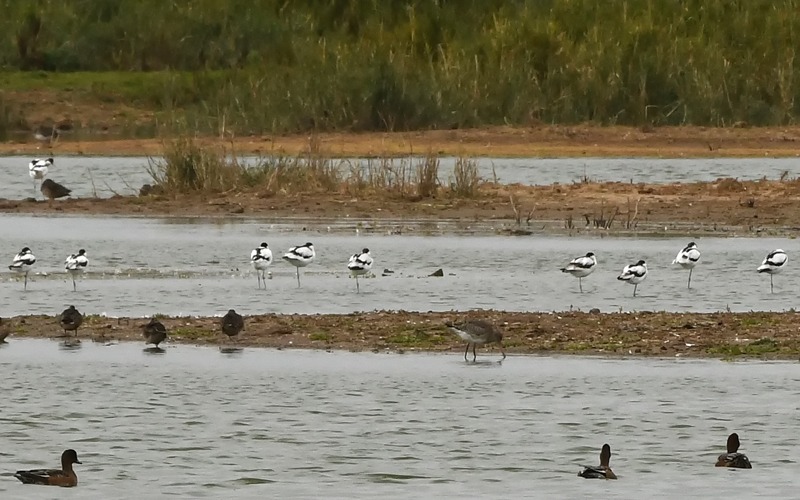
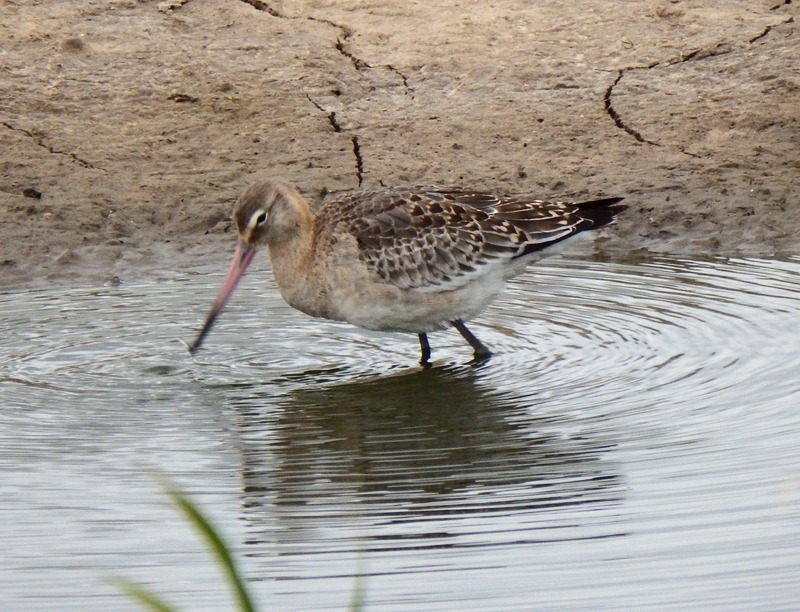
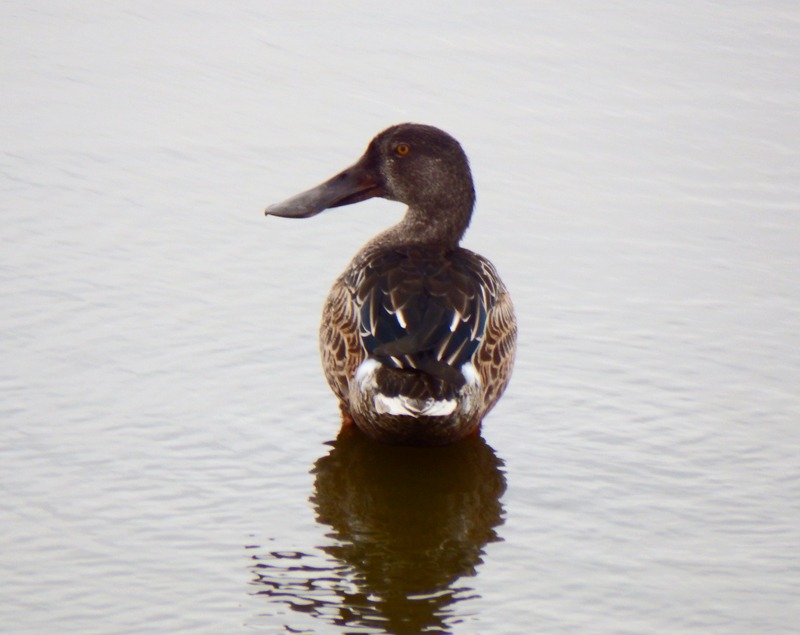
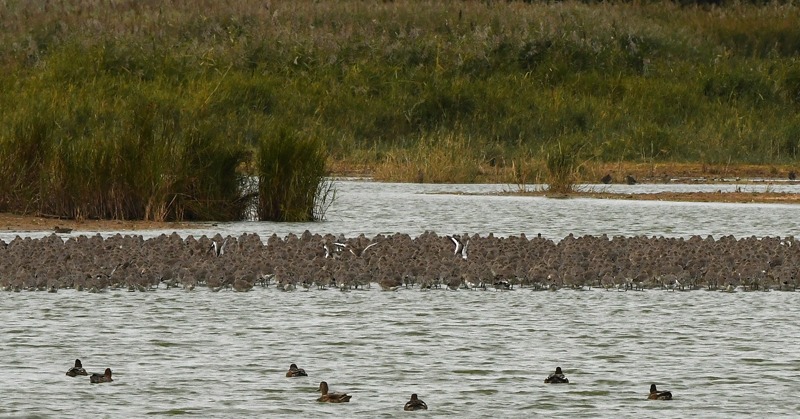
Most of us took the opportunity of a welcoming hot drink on arrival at the Visitor Centre, while overlooking the Reedbed pools where we were able to observe large rafts of Black-tailed Godwits, estimated by the centre staff to total around 2,500. There were also good numbers of Dunlin, Ringed Plover and Avocet, as well as plenty of Shoveler, Wigeon and Teal. The bird feeders just outside the window provided close-up views of some common species, such as House Sparrow, Goldfinch, Greenfinch and Blue Tit.
Moving round to the Reedbed hide we settled in to try and identify more waders and were rewarded with a couple of Ruff, a Greenshank and a number of Golden Plover. The numbers of Wigeon flying in were steadily increasing and we were able to pick out 4-5 Pintail among them, distinguished by their longer necks and more upright posture in the water.
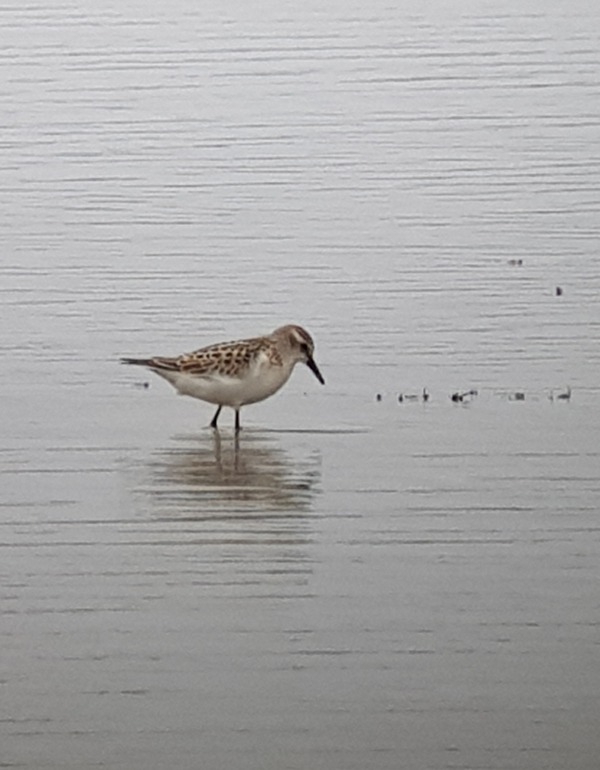
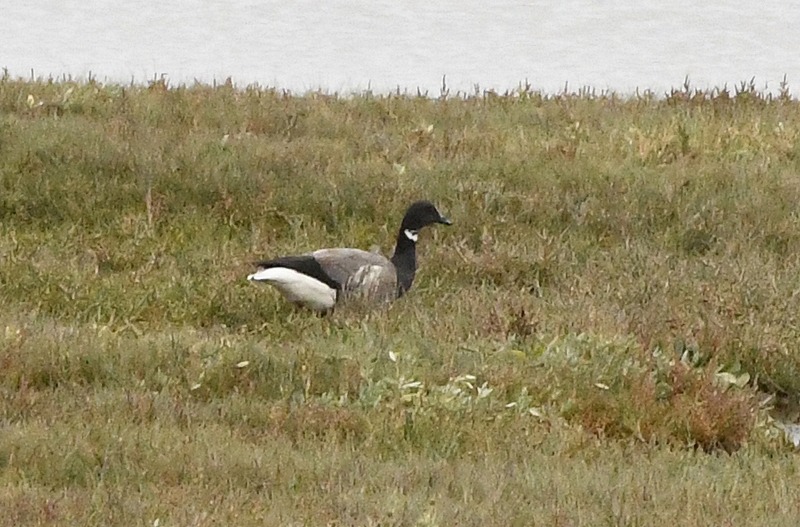
After lunch, we set off round the Wash trail in search of a Little Stint which had been spotted at the southern corner of the trail and we were able to get fairly good views of this tiny wader, along with a Snipe which not surprisingly proved more difficult to locate. Further round a Spotted Redshank was seen, at least half a dozen Little Grebe and a solitary Brent Goose.
Continuing round the Wash trail, then the Reedbed trail, we encountered flocks of Linnets, Meadow Pipits and a pair of Stonechats. Arriving back at the Visitor Centre we were treated to a female Merlin sitting on a fence across the fields, as well as Egyptian Geese in a field, and a single Whooper Swan on the Reedbed pools.
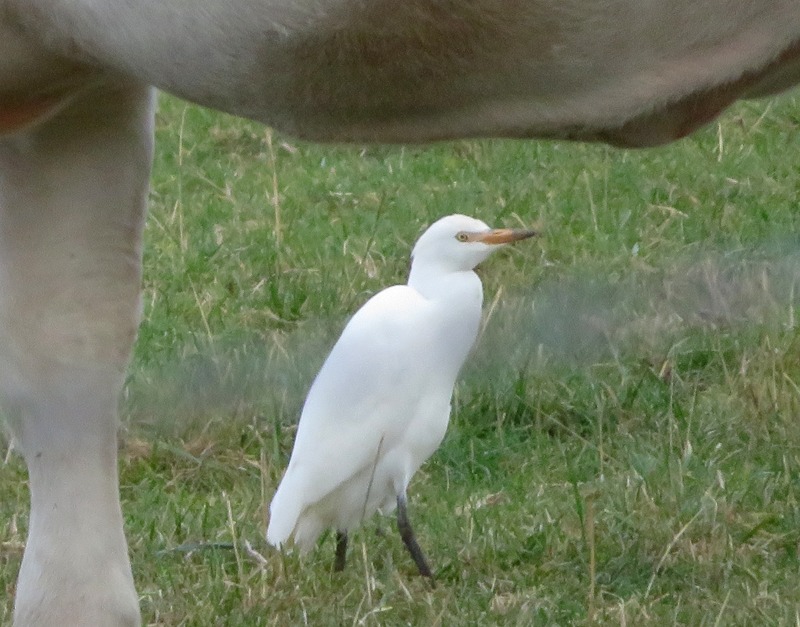
On news that a Cattle Egret had been seen, a few of our group ventured down a tree-lined path to a reservoir, picking up Chiffchaff on the way. The egret was indeed there, scampering between the legs of grazing cattle, while some other species including Coot, Tufted Duck and Great Black-backed Gull which had eluded us so far were bobbing on the water of the small reservoir.
All in all it was a very good day which everyone seemed to enjoy, with a collective total of 61 species seen by the group. Below is the full list …
Mute Swan, House Sparrow, Black-headed Gull, Cetti’s Warbler, Swallow, Goldfinch, Black-tailed Godwit, Wigeon, Greenfinch, Linnet, Blue Tit, Robin, Common Gull, Moorhen, Avocet, Dunlin, Ringed Plover, Lapwing, Shelduck, Teal, Mallard, Kestrel, Skylark, Starling, Shoveler, Pintail, Golden Plover, Greenshank, Ruff, Carrion Crow, Little Egret, Little Stint, Snipe, Cormorant, Spotted Redshank, Little Grebe, Gadwall, Brent Goose, Herring Gull, Canada Goose, Meadow Pipit, Woodpigeon, Stonechat, Magpie, Merlin, Egyptian Goose, Whooper Swan, Blackbird, Chiffchaff, Pheasant, Cattle Egret, Coot, Tufted Duck, Great Black-backed Gull, Collared Dove, Great Tit, Dunnock, Buzzard, Tree Sparrow, Pied Wagtail and Jay.