Carsington Bird Club CBC Newsletters

CBC Newsletter No.4 – November 2013

CHAIRMAN’S THOUGHTS

As I write this in mid-November, I’ve had to resort to my ice scraper for only the second time since last winter.  Yes, the adult Great Northern Diver is back with us and there are Redwing and Fieldfare around but in no great numbers, and I have just been watching a mixed flock of tits picking food from leaves still left on my apple tree, so winter is around the corner but has not seemed in any great hurry to arrive.

But the weathermen have warned it will be much colder next week, with chill winds sweeping down from the Arctic (by the time you read this, we’ll know whether they were right!) – so it looks like the birds will really be needing our help with feeding from now on so stock up.

The other gift that the clement weather provided was a prolonged exit of summer birds on migration like the long-staying Garganey at the reservoir.  Two Swallows were spotted at Knoll Beach in Dorset yesterday.  Together with stormy weather bringing sea birds inland, all this has added up to a rich variety of birds passing through Derbyshire this autumn, especially for those observers who had not only forecast the weather patterns’ effects but who were hardy enough to venture out in the wind and rain to see what was about.  It seems an age now since ‘Autumn Watch’ was on the television!

So what can we look forward to this winter in and around Carsington?  Well, with 22 Great Northern Divers seen recently from a cliff-viewing spot in County Mayo, Ireland, it would be reasonable for us to hope a few more divers might come our way.  A longer-shot might be White-billed Divers, two of which were seen in Shetland.

Reports posted from Scotland described sizeable flocks of Waxwing and, closer to home, five Whooper Swans were at Kedleston.  I have noticed a larger amount of beech ‘mast’ covering the woodland floor near me at Holloway, which was welcomed by some Brambling feeding on it.  Great Grey Shrike, recently spotted at Beeley, is no stranger to Carsington, so one might just turn up.  Meanwhile, good-sized Starling flocks have been flying around Carsington.  Wouldn’t it be wonderful if they all assembled for another huge roost like they did at Kirk Ireton one year recently?

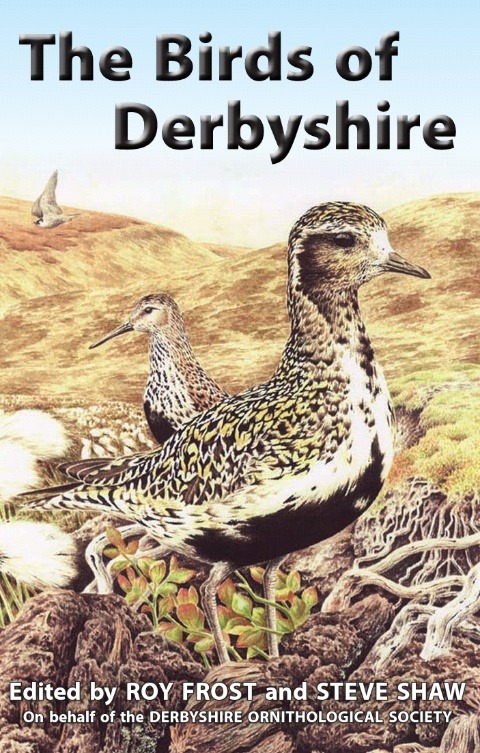
Also on their way are two eagerly-awaited books: The BTO’s Atlas of Breeding and Wintering Birds has been promised for this autumn, and The Birds of Derbyshire, published by DOS, is also about to appear on the bookshelves.  If you haven’t ordered them, and still have a space on your Christmas present list, they can be obtained via those organisations’ websites.  Certainly I’m looking forward to some happy reading when perhaps the winter weather is too awful to go out or the days simply get too short.                                                                    

Peter Gibbon

RESERVOIR’S RARE OLD OCTOBER!

Once the calm and warm summer finally moved aside, strong easterly and northerly winds arrived to play havoc with a few birds’ navigation systems – resulting in one of the most exciting Octobers on record at Carsington Water.  Among more than a dozen site rarities that showed up that month were four species on the Derbyshire rarities list.

Only the sixth and seventh site records of Gannet were logged when young birds turned up briefly on the 12th and 18th.  The fourth appearance at Carsington of a Green-winged Teal was enjoyed by quite a few birders, since it stayed for nine days, and a visit from a Grey Phalarope – viewable from Sheepwash and Lane End hides on the 19th – was only the sixth record for Carsington.  Meanwhile, two Great Skuas (aka Bonxies) wheeled in for 20 minutes on the 11th, followed two days later by another that stayed around for two hours before flying off to the north-east.

As well as those county rarities, a Whooper Swan was seen on the 13th and 19th, a Brent Goose popped in on the 1st, a Little Egret stuck around three days from the 6th, a drake Common Scoter was viewed from Sheepwash on the 12th, while the following day six Red-breasted Mergansers could be seen from the same vantage point.

Other unusual visitors to site included a Garganey that had arrived on 16 September and stayed six weeks, and during October two Rock Pipits, a male Stonechat and two Crossbills were also recorded.

For once, this frenetic period of activity perhaps rather overshadowed the return of our winter favourite – the Great Northern Diver, which dropped in on 9 November and looks set to stay a while once again.

Since the last newsletter we’ve seen summer birds depart, replaced by some winter arrivals.  The last Sand Martins were recorded on 19 September, two days before the final Wheatear on site, while it was more than a month later than a solitary Swallow flew through.  The latest ever Arctic Tern at Carsington, a juvenile, was seen on 20 October. 

While the last Sedge Warbler, Whitethroat and Willow Warbler were logged over five days in early September, as many as 17 Chiffchaffs were still around on 11 September.  Three Chiffchaffs were noted on 21 October, and nine days later a Blackcap was seen, so they seem likely to be overwintering birds.

Arrivals included Fieldfares and Redwings (63 and 465, respectively, were recorded on 20 October), and Siskin and Lesser Redpoll have been noted, as was a Brambling on 1 November.  Meanwhile, Starling have been increasing in numbers with as many as 400 seen in a single flock.

September’s wader passage was good, with 15 species noted, including Curlew Sandpiper, Little Ringed and Grey Plovers, both Godwits, Ruff and flocks of up to 300 Lapwings.  A Jack Snipe was spotted on 22 November.

Wildfowl numbers spiked as usual in the autumn with 1,184 being the highest count of Coot so far, along with up to 462 Teal, 448 Tufted Ducks, 324 Wigeon and 255 Pochard, and smaller numbers of Goosander, Pintail, Scaup and Shoveler.  A Red-crested Pochard was in residence for two weeks in September, and both Great-crested (after a good breeding season) and Little Grebes were around in reasonable numbers.

The gull roost incorporated as many as 4,000 Lesser Black-backed Gulls, and at various times has included two Kittiwakes, plus Little Gulls both in September and October.  Perhaps less welcome is the return of ‘Brutus’, our cannibalistic Yellow-legged Gull who ate a young Black-headed Gull in front of an audience.  We’re hoping those Little Grebes keep their heads down this year!

An Osprey passing through in early September topped the raptor chart, though two Hobbys heading south on 13 September and Peregrines logged both in September and November were also good sightings.  Sparrowhawks were a fairly regular sight, including on consecutive days in mid November.


BIRD OF THE ISSUE:  GREY PHALAROPE

Grey Phalaropes breed in the Arctic and spend much of their lives when not breeding well out to sea, feeding, on marine plankton – so when we see them they are most likely to have been blown off course by a storm.  In North America they are known as ‘Red’ Phalaropes because of their vibrant crimson-red breeding plumage.

Only around 200 are seen in the UK each year, usually between October and January, mostly around the coast, so to have had one at Carsington this autumn is something of a prize.  ‘Our’ bird was in non-breeding plumage – a quite distinctive grey and white.   They tend to be quite tame and approachable, which is a distinct advantage for the bird-watcher who may not get many chances to view Phalaropes.

On their breeding grounds, Phalaropes feed on insects and aquatic animals and, interestingly, in this species, like all Phalaropes, the breeding roles are reversed.   Females are larger and more brightly coloured, they pursue the males, compete for nesting territory and will aggressively defend their nests and mates – and, once the eggs are laid, they leave the incubation and raising of the young to the males.


BIRDING ON THE MOVE …

As we batten down the hatches for winter, it’s refreshing to look back at some of our members’ experiences on holiday.  Here are two accounts of the rich (and sometimes baffling) bird-life found in farther-flung locations…

BORNEO – A WILDLIFE HAVEN

Malaysia emerged top of the pile when my wife and I decided to go ‘somewhere a bit different’ for our 35th wedding anniversary – and through our excellent travel company, Selective Asia, I was able to make sure the itinerary included Sabah, one of the two Malaysian provinces on the island of Borneo, noted for its wildlife, most particularly as one of the last refuges of the iconic Orang-Utan.

We also took in three locations on mainland Malaysia, including Kuala Lumpur, and each boosted my growing bird list, but there can be no doubt that our first destination, Borneo, was the main highlight.  Magical is an overused adjective, but the view from our balcony at Borneo Rainforest Lodge – overlooking a garden, meadow and river, with the jungle’s living tapestry as a backdrop – was, well, quite simply magical.

I’d pored over field guides and trip reports before setting off, in an attempt to research which birds I might see, but as well as species, there were families I’d never heard of, such as sibias, minlas, trogons and fulvettas, so I knew it wouldn’t be easy.  Furthermore, bird-watching somewhere so totally alien demands different techniques, since virtually all birds spotted were new to me! 

So, after my trusty bins, the most important tool was a notebook in which I scribbled each bird’s distinctive features before dashing back to my room at the end of each session to pore over the field guide and see if I could work out what I’d just seen! Guides in two locations were a great help, and without them I may not have managed the 118-strong total of my final list.

The most awesome bird of the trip was almost certainly the Rhinoceros Hornbill, which is four feet long and competes with the cicadas as the noisiest thing in the jungle.  I saw four hornbill species in all, including at Kinabatangan Riverside Lodge a pair of ‘Oriental Pieds’ that evidently roosted in the same tree every night.

Among several raptors, the White-bellied Sea Eagle was probably the most impressive, while for stunning colours the Black-naped Orioles that patrolled a city-centre park in Kuala Lumpur were hard to beat, though the electric blue Large Niltava ran them close, each Kingfisher on view was a riot of colour, and the Whiskered Treeswift’s markings were exquisite.

Bulbuls and Drongos were lively, the Black-thighed Falconet (a sparrow-sized raptor!) was delightful, and species with unlikely names like Fluffy-backed Tit Babbler , Silver-eared Mesia and Black-throated Wren Babbler have now made it onto my ‘life list’.  

A few acquaintances from previous Asian trips popped up again, including the Oriental Darter, Spotted Dove, Brahminy Kite and Large-billed Crow, and the ubiquitous Mynas were everywhere.  Even more familiar were the small handful of birds I also see in the UK – like Grey Wagtails, Common Sandpipers and Tree Sparrows, which seemed to have displaced their ‘House’ cousins as the most regularly seen ‘town’ bird.

But it wasn’t all about birds and Orangs: Borneo boasted other exciting primates – such as gibbons, macaques, langurs and the odd-looking proboscis monkey.  Their haunting calls – along with the immense din generated by cicadas at dusk – brought the jungle alive. 

Then there were reptiles and insects, including hand-sized butterflies sipping nectar.  We also saw flying squirrels and a slow loris during a night drive, and several monitor lizards, one of which lumbered across a golf course I’d decided to investigate.

And if I had to choose a single spellbinding moment it didn’t actually involve a bird.  It came when I stealthily mounted a canopy walk for a spot of quiet bird-watching; I’d gone only a few paces when, looking to my right, I spotted a mother and baby Orang-Utan relaxing in a tree top not 30 yards from me.  Doing as I’d been told by our guide, I switched off my camera’s flash and, in those valuable few seconds, the orange beasts had silently slipped out of sight.  No picture – but a magic memory!

 Gary Atkins

A CRANE-FEST IN HUNGARY

Our Webmaster Richard Pittam’s love of birding and photographing birds was rewarded during a trip to Hungary in September, which he’d organised through regional specialists, Saker Tours.

The quest for good photographs meant each of his five days in Hungary saw Richard ensconced in a hide – two days in Crane hides, two at a passerine drinking pool and another at a Pygmy Cormorant hide.  Though birds were his main target, other wildlife gave him some good opportunities, including Roe Deer and a number of Red Squirrels that were closer to black than red!

Common Cranes turned up each time they were expected, and Richard managed to get some fine shots of these impressive birds.  Other water birds that posed nicely for Richard’s unseen lens were Great White Egret, Water Rail, Little Crake (“a tick”, adds Richard), Wood Sandpiper and Spotted Redshank, with Bearded Tit, Marsh Harrier, Reed Warbler and Hobby also showing up in their natural habitat.

While a pair of Sparrowhawks were also willing models at the drinking pool, they were also a pest as they tended to scare away some of the smaller birds Richard hoped to capture on film.  Nevertheless, he saw Greater, Lesser and Middle Spotted Woodpeckers, and a pair of Hawfinches, one of which when startled flew right into the window of the hide.  With that sturdy beak, it was a surprise the glass didn’t break!

A lot of the good birds were seen during his day in the cormorant hide, when Pygmy Cormorant duly arrived, along with Coot, a number of ducks – and those reliable cranes once again.  His first day in the crane hide also produced some good non-water species, including Turtle Dove, Hooded Crow and Red-backed Shrike.

To read Richard’s own words on this trip – and to view some of Richard’s brilliant shots in Hungary go to http://www.richardpittam.com/wildaperture/blog/?p=2725


TREES AND TATTOOS ON TALKS AGENDA

Turkey, Morocco and the fate of our own British woodlands were the topics on the agenda during our talks over the past three months.

Noted photographer and regular Carsington guest speaker Paul Hobson talked eloquently and passionately about what is happening to the woodland on our own doorsteps.  As with most habitats there was bad as well as good news, and his photos spoke volumes on their own.  His main focus was birds, but he also higlighted mammals, insects – particularly moths and butterflies – and funghi, describing how important each was to the long-term future of woodland habitats.

Chris Ward took us to Morocco – which contains a variety of landscape that would surprise most of us, from snow-capped peaks to the arid fringes of the Sahara Desert.  His brilliant photographs would do nothing but encourage anyone contemplating a trip to north Africa, and Chris painstakingly described where to go and what to see in the best habitats.

Perhaps the most unusual talk came from Tristan Reid – aka The Inked Naturalist – who was on a two-pronged mission: firstly he showed us some of the brilliant birdlife found off the main tourist trails in Turkey … and secondly he told us about his extreme ventures in support of a local conservation organisation that is concerned about the damage to globally-important biodiversity sites that will result from the Turkish government selling off its waterways to private sector companies.

In an attempt to raise awareness of this issue – and funds – he has already had his arms and torso tattooed with 24 of his favourite ‘local’ birds, and next year he plans to begin a 4,000-kilometre walk from west to east across Turkey to celebrate the country’s wondrous wildlife.  Needless to say his fee went straight into the charity pot.


BUTTERFLIES – THE FINAL SCORE

Last issue we said what a fine year it was turning out to be for butterflies.  Well, the mild and warm conditions ensured that this continued throughout the late summer in much the same vein, and on the two formally-prescribed Carsington ‘transects’ alone more than 1,150 butterflies were recorded, representing an increase of around  250 per cent on last year’s grand total.

Around the Shiningford transect, the 758 butterflies seen was the second highest transect aggregate since Carsington records began in 1994, and more than tripled last year’s total.  Eighteen species were identified, including a site ‘first’ in the shape of the delightful Dark-Green Fritillary.

Sheepwash transect registered 399 butterflies, which though more modest was still an increase of 66 per cent over 2013.  Overall 26 species – roughly half those likely to be seen in the UK – have now been recorded at Carsington Water.   And if this year’s trend continues, it’s quite possible a couple more new species might be recorded in the next year or two.


WHAT'S ON

Our winter programme of illustrated talks is now under way, and we’ve had some real variety already (see report above).  Next it’s our Christmas party, with our AGM scheduled for January.  As the newsletter went out, we’d still to finalise speakers for our February and March meetings.  If you can get along to any of the forthcoming dates, remember we usually begin meetings at 7.30pm (but note AGM begins at 7pm) and it’s £2 for members and £2.50 for non-members.

17 December 2013 – Food and drink at the Bird Club’s Xmas party, including a look at Borneo’s wonderful wildlife by Gary Atkins – Henmore Room 7.30pm 

21 January 2014 – Annual General Meeting, followed by Ornithological Fraud  by Peter Gibbon –Henmore Room 7pm

The regular Severn Trent Water events – which will continue into 2014 – are listed below, and on 14 December there is also an RSPB optics demonstration day, when people contemplating buying binoculars and telescopes can try them out for size.  And remember, some events need booking, so it's always worth checking with the Visitor Centre on 01629 540696 before going along.

First Sunday – Birdwatching for beginners (enjoy a gentle two-hour walk led by experienced STW volunteer ranger David Bennett – Visitor Centre 10am-noon each month 

Tues/Sundays – Spotting wildlife (STW volunteers man the Wildlife Centre) – 10.30am-3.30pm

First Tuesday each month – ‘Nature tots’ – a series of learning events for youngsters run by the DWT/SWT Partnership (contact 01773 881188 for places) – 10-11.30am        

Last Saturday each month – Sheepwash Spinners (learn about traditional wool spinning with demonstrations, from fleece to gifts to garments) – Visitor Centre 11am-3pm.


KNOW YOUR COMMITTEE  –  Here are the club officials and their contact details ……

                                                                         Tel                          e-mail

Chairman/ Indoor mtgs       Peter Gibbon                       01629 534173     peter.gibbon@w3z.co.uk

Secretary                             Paul Hicking                        01773 827727    paulandsteph@hicking.plus.com

Treasurer                             John Follett                          01332 834778       john@jlf.demon.co.uk

Recorder                              Roger Carrington                 01629 583816       rcarrington_matlock@yahoo.co.uk

Newsletter editor                 Gary Atkins                           01335 370773       garysatkins@aol.com

Outdoor trips                        Peter Oldfield                      01629 540510       peter.oldfield2011@gmail.com

Membership                        Dave & Sue Edmonds           01335 342919       sue@axgb.com

Ex-officio                             Jon Bradley                         01773 852526       jonathan.bradley4@btinternet.com

and the website address:   www.carsingtonbirdclub.co.uk

(website maintained by:  Richard Pittam )

Carsington Bird Club Member Reports

Malaysia 2013 Trip Report – Gary Atkins

MAGICAL SIGHTS AND SOUNDS IN THE JUNGLE

Anniversaries seem to roll round at an alarming rate, and as we approached “35” my wife Meryl and I decided on another ‘special’ holiday.  We’d been to New Zealand at 25, Canada five years later, so looking for somewhere different we thought we’d try Asia – and with a love of wildlife Borneo seemed an obvious choice.

Our tour also took in the frantically-busy cities of Kuala Lumpur and Georgetown on mainland Malaysia, plus the rather-more-sedate and distinctly cooler Cameron Highlands, which offered further chances for good bird-watching.  But without doubt, the Borneo jungle was the outstanding highlight.  Magical is an overused adjective, but the view from our balcony at Borneo Rainforest Lodge – overlooking a garden, meadow and river with the jungle’s living tapestry as a backdrop – was, well, magical.

I’d tried to research which bird I might see there – courtesy of trip reports and two field guides – but there were so many types I’d barely heard of, such as flowerpeckers, sibias, minlas, trogons and fulvettas, it seemed a forlorn hope.  At the end of 14 days, though, I’d accumulated a list of 118 species, so perhaps the ‘homework’ did do some good after all.

Of course, bird-watching somewhere so totally alien calls for different techniques, since virtually all birds spotted were new to me!  So, after my trusty binoculars, my most important tool was a notebook in which I scribbled the distinctive features of each unrecognised bird.  Then, after each birding session I’d dash back to my room and pore over the field guide to see if I could work out what I’d seen!

I got practical help in a couple of locations: a local birding guide was available for the early-morning ‘waves’ in the Cameron Highlands, and at the two jungle lodges, personal guides kept us busy with as many treks, canopy walks and night drives and they – and we – could manage … So, I have to admit a fair few ‘spots’ were largely down to local expertise, though I did still check out the field-guide to make sure.

I’ll come back to the birds, but Borneo’s bewildering range of primates, reptiles and insects is also worthy of mention.  Orang-Utans are a highlight, of course, and we saw them both in rehabilitation reserves and in the wild.  One truly magical (oops, there I go again) moment for me was when I returned alone to a canopy walk and spotted to my right a mother and baby Orang relaxing in a tree top just 30 yards from me.  Doing the decent thing, I switched off my camera’s flash, but in those valuable few seconds, the orange beasts had silently slipped out of sight.

Long- and pig-tailed macaques, Bornean gibbons, proboscis monkeys and red- and silver-leaf langurs were among other primates we saw among the branches.  Their haunting calls – along with the immense din generated by cicadas at dusk – brought the jungle alive. 

I saw flying squirrels, tree shrews, a slow loris and several monitor lizards, one lumbering sedately over a golf course. Massive bird-winged butterflies flew by and daintier tree nymphs seemingly floated down like leaves to feed on flower buds.  Photos of stick insects, leaf insects that were virtually impossible to spot among the vegetation, several other types of mantis, a scorpion and a rhinoceros beetle were obtained fairly easily as they were part of the display in an oddly-named ‘butterfly farm’.

The most awesome bird of the trip was almost certainly the Rhinoceros Hornbill, which is four feet long and competes with the cicadas as the noisiest thing in the jungle.  I saw four hornbill species in all, including at Kinabatangan Riverside Lodge a pair of ‘Oriental Pieds’ that evidently roosted in the same tree every night.

Among several raptors, the White-bellied Sea Eagle was probably the most impressive, while for stunning colours the Black-naped Orioles that patrolled a city-centre park in Kuala Lumpur were hard to beat, though the electric blue Large Niltava ran them close, each Kingfisher seen was a riot of several shades, and the Whiskered Treeswift’s markings were exquisite.

Bulbuls were busy and characterful, the  Black-thighed Falconet (a sparrow-sized raptor!) was a delight, and unusual names like Silver-eared Mesia and  Black-throated Wren Babbler have now made it onto my ‘life list’, but surely the Fluffy-backed Tit Babbler wins the prize as the cutest name.

Nevertheless, a few old acquaintances from previous Asian trips popped up again, including the Oriental Darter, Spotted Dove, Hill and Common Myna, Brahminy Kite, Dollarbird and Large-billed Crow.  Each seems fairly widespread across most of South-east Asia.

Though my list included very few birds we would see in the UK, it was nice to see Grey Wagtails, and Tree Sparrows seemed to have replaced their ‘House’ cousins in co-habiting with people.

Rhinoceros Hornbill

White-throated Kingfisher

Crimson Sunbird

Below is my full cast list ……..

Spotted Dove, White-breasted Waterhen,  Tree Sparrow,  Yellow-vented Bulbul,  Brown-throated Sunbird,  Asian Glossy Starling, Cattle Egret,  Pink-necked Green Pigeon, Crimson Sunbird,  Oriental Magpie-Robin, Chestnut Munia,  Scaly-breasted Munia, Zebra Dove,  Intermediate Egret,  Olive-backed Sunbird,  Common Iora,  Forest Wagtail, Pied Fantail,  White-breasted Wood Swallow, Dusky Munia, Mekong Wagtail, Great White Egret, Oriental Darter, House Swallow,  Edible-nest Swiftlet                     Little Egret, Pied Triller,  Rhinoceros Hornbill, Common Myna,  Long-tailed Parakeet, Brahminy Kite, Black Hornbill, Great-billed Heron, Osprey, Slender-billed Crow, Bold-striped Tit Babbler, Barn Swallow, White-bellied Sea Eagle, Bushy-crested Hornbill, Blue-eared Kingfisher, Pied Hornbill, Dollarbird, Black-capped Kingfisher, Crested Serpent Eagle, Spectacled Spiderhunter, Yellow-rumped Flowerpecker, Dusky Broadbill, Blue-throated Bee-eater, Mossy-nest Swiftlet, White-crowned Shama, Hill Myna, Lesser Green Leafbird, Fluffy-backed Tit Babbler, Black-throated Wren Babbler, Crested Flameback, Brown Fulvetta, Green Iora, Spotted Fantail, Whiskered Treeswift, Streaky-breasted Spiderhunter, Black-naped Monarch, Dark-throated Oriole, Grey-headed Canary Flycatcher, Scaly-crowned Babbler, Malaysian Blue Flycatcher, Rufous-crowned Babbler, Little Spiderhunter, Lesser Fish Eagle, Changeable Hawk Eagle, Paddyfield Pipit, House Sparrow, Crested Myna, Black-naped Oriole, House Crow, Black Kite, Black-thighed Falconet, White-throated Kingfisher, Chinese Pond Heron, Grey Wagtail, Grey Heron, Common Sandpiper, Little Heron, Silver-eared Mesia, Brown Shrike, Stripe-throated Bulbul, Mountain Bulbul, Long-tailed Shrike, Fork-tailed Swift, Black Drongo, Greater Racket-tailed Drongo, Large Hawk Cuckoo, Lesser Shortwing, Malaysian Whistling Thrush, Red-headed Trogon, White-tailed Robin, Blue-winged Minla, Mountain Fulvetta, Crimson-breasted Oriole, Large Niltava, Black-throated Sunbird, Fire-tufted Barbet, Blue Nuthatch, Large-billed Crow, Green Magpie, Slaty-backed Forktail, Grey-chinned Minivet, Everitt’s Whiteye, Chestnut-capped Laughingthrush, Mountain Tailorbird, Long-tailed Sibia, Streaked Wren Babbler, Lesser Racked-tailed Drongo, Javan Cuckoo Shrike, Black-crested Bulbul, Tiger, Shrike, Rock Dove, Germaine’s Swiftlet, Silver-backed Needletail.

Carsington Bird Club CBC Newsletters

CBC Newsletter No. 3 – Aug 2013

CHAIRMAN’S THOUGHTS

 This week I have had a big clear out of old paperwork, among which were two green A4 sheets entitled ‘Common Birds in Derbyshire – No2 Little Grebe’, which were sent with reports from DOS. The article started with a chart showing this species’ maximum monthly counts (MMC) from January 2006 to December 2007, and went on to say it ‘…illustrates the dominance of Carsington Water as the principal water …’, and this site now holds the MMC records for ten months of the year, all since 2003.   

The reservoir was actually opened in 1992, when the MMC was only 11, the third lowest between 1960 and 2007.  A count of 105 there during December 2005 (and repeated in January 2006) exceeded the British threshold of 78, which represents 1% of the Little Grebe population in Britain.  This threshold figure was surpassed at Carsington Water in four months during 2007, including a new county record of 107 in December.  I had totally forgotten how important our reservoir has been not only just in county terms but also nationally – with a mention in the bi-annual Wetland Bird Survey (WeBS) book.

This green paper also informed, however, that the highest counts for the summer months came from Cromford and Chesterfield Canals, since Little Grebes prefer breeding on linear waters.  So how does 2013 compare with these records?  Well, I have walked along the Cromford Canal this week and between the Wharf and High Peak Junction there were just two families with a single chick.  As for Carsington, only one family has been found and the most counted recently have been four adults, and sometimes you are struggling to see a single bird.

The monthly WeBS counts we perform have illustrated this decline for Carsington very clearly, whereas counts for the stretch of Cromford Canal show much less of a change.  The 2010/2011 WeBS report suggested the reason for a national decline in Little Grebes as cold winter conditions on traditional sites.  But for us the decline continued beyond 2011 – so I await the 2012/13 report, plus information from the new Atlas due out this autumn, to see why this is the case.

Yet on the plus side, we have seen increases during the same period in Great Crested Grebe and, more recently, for Reed Warbler.   We can also claim Redstarts have returned to Carsington to breed this summer, which only goes to show how the ecology is constantly changing and how our records are an important way of monitoring this change.

Peter Gibbon


OSPREYS DISPLAY THEIR FISHING SKILLS WHILE MARSH WARBLER IS SITE ‘FIRST’

A Marsh Warbler, a new species for Carsington Water, and only the sixth Derbyshire record, was found skulking in bushes behind the Visitor Centre toilet block on 10 June.  As it remained most of the day, local birders were able to take a rare opportunity for a close-up look at a true rarity, maybe even adding a ‘lifer’ tick to their personal records.

Other recent highlights included fishing Ospreys in June and July, 16 Common Scoters that turned up on 13 July while a irruption of Crossbills through the east coast saw both ‘Common’ and ‘Two-barred’ sub-species turn up at Carsington.

Breeding got off to a very slow start with the cold and wet weather of spring, but by June the now-regular warm and sunny conditions had arrived and proved much more conducive to raising young.  By the end of July seven Great-Crested Grebe broods were counted, along with two Moorhen, nine Coot, 18 Mallard and 24 Tufted Duck families.  Barnacle and Canada Geese and Mute Swans also added to the reservoir’s bird population.

Oystercatchers, Lapwings and Redshank eventually produced similar numbers of broods to normal, and Black-headed Gulls extended their breeding range onto Millfields Island with a site total of 38 young ‘Black-heads’ counted in late July.  Terns were relatively few and far between,but six Black and an Arctic passed through in late August.

While hirundines never did quite recover, with only one Swallow and one House Martin family noted, other small birds seemed to be breeding well.  Redstarts have traditionally proved scarce on site, but as many as five Redstart broods were logged this year, along with a number of Spotted Flycatcher and Reed and Sedge Warbler young.  Tit families included two Willow, two Blue and three Great Tits, with Nuthatch also seen feeding young in a box in Shiningford Creek in June.  Meanwhile, House and Tree Sparrow numbers seem to have ballooned around the Visitor and Wildlife Centres.

A walk round the reservoir in early June recorded good numbers of warblers and other passerines – including 59 Blackbirds, 49 Blackcaps, 47 Chiffchaffs, 45 Chaffinches, 38 Wrens, 35 Willow Warblers, 32 Robins, 24 Whitethroat, 23 Song Thrushes and 11 Garden Warblers.  Eighty Jackdaws were counted over Sheepwash in July, while a flock of 40 Goldfinch was spotted on Stones Island, also in July.

Little Egrets are no longer a rarity, but they are always a bit of a surprise – and two were seen 28-29 July, with another noted on 10 August.  Grey Herons upped their numbers from late July, with 11 counted in early August.  A Green Sandpiper spotted on 30 June was the first for Carsington since 2011, and several Whimbrel and Greenshank sightings during August may have signalled the start of the autumn wader movement.

Little Grebe numbers have been very low, but as many as 11 were logged in late August.  It is to be hoped that the sight of a recently-returned Yellow-legged Gull eating a dead pike indicates that this carnivorous species has changed its menu since last year!

Raptors have been few and far between, but a Hobby was seen hunting on 24/26 June and Peregrines became more regular visitors during late July and August.  Both Ospreys seen in the last quarter were keen to show off their hunting prowess: one seen on the Lane End post on 10 June had a fish, while the 28 July record impressed observers as he/she was seen in the act of catching its supper.


BIRD OF THE ISSUE:  MARSH WARBLER

Keen birders flocked to Carsington Water in early June to catch sight (quite probably their first ever) of the Marsh Warbler.  It is ‘red status’ rarity in the UK, with only 3-10 pairs reckoned to breed in Britain each year.

It is not surprising, then, that this sighting, in typically dense scrub behind the Visitor Centre, was greeted with such enthusiasm and surprise.  And yet Marsh Warblers are actually as close to the typical ‘LBJ’ as you can get – with uninspiring plumage, and looking rather like a Reed Warbler, though slightly lighter in colour below and with pale legs.

It is its voice for which the Marsh Warbler is particularly renowned: this Mike Yarwood (remember him!) of the bird world is an amazing mimic and throws any number of other birds’ phrases in among its own – and not only the songs and calls of other passerines but waders, pigeons and even the more exotic birds encountered in its winter quarters. Identification by voice, therefore, can be tricky.

Like many of its cousins, the Marsh Warbler is insectivorous and seeks is food among dense scrub and grassland.  It tends not to spend much time in reedbeds alongside its closest lookalike.

While the British population has diminished to virtually nil, in its breeding grounds in temperate Europe and western Asia, the Marsh Warbler is doing well, with an estimated global population of between 10 and 25 million.  Like many warblers, it overwinters in western Africa.


NEW DISPLAYS AT WILDLIFE CENTRE AIM TO EDUCATE AND INSPIRE

As most of you will realise, we are currently in the middle of our peak visitor season. The country lanes are bustling and local campsites are booked out. It’s good to see the popularity of Carsington Water continue to grow – but extra people means our fixtures and fittings can look a bit worse for wear come the end of the school holidays.

A good example of this is the Wildlife Centre. The building itself is nearly 20 years old and generally in pretty good shape though you may have noticed the interior is looking a bit shabby as exhibition units and displays show their age.  The exhibition inside the building no longer catches the eye of our visitors, particularly the young people they were most particularly designed to entertain and educate. 

So, it’s time for a change – and for the last few months we have been working on plans to remove the tired units and the clutter of signs and posters and replace them with a brand new exhibition at the rear of the building.

This new display will continue to teach our visitors about the fantastic wildlife Severn Trent Water reservoirs give access to but also the importance of our fast-disappearing wetland habitats across the UK.

Through a mix of information and games, visitors of all ages can learn all about how the water we use is a precious and shared resource, how wasting water can have a detrimental effect on our wildlife, and how we all need to get better at managing water resources, particularly in the face of the increasingly extreme weather conditions experienced in the UK.

Rising and falling water levels at Carsington make the reservoir an incredible teaching aid and the Wildlife Centre with its proximity to the water and staff of volunteers is a great place to communicate these messages to the public and really get them thinking about the consequences of their water use.

The new layout will open up the Wildlife Centre, making it feel much more spacious and, by decluttering, we hope visitors will appreciate the beauty of the building itself.  The new exhibition will also feature a central table topped by a large map of Carsington Water.  This will direct visitors to developing habitats like the reed beds, to our ongoing conservation projects such as the Osprey nesting platforms, to our overlooked wildlife spectacles like the gull roost and to the best places to spot the flagship species of the reservoir, such as Water Voles, Great Northern Divers and Bluebells.

Work should begin on the Wildlife Centre once the summer holidays are behind us and, when the new exhibition is installed, we will move ahead with plans to clear up interpretation panels/noticeboards and renovate the pond behind the Centre.

So, don’t be alarmed if you see changes taking place in the Wildlife Centre over the coming weeks.  It’s all in a good cause.  I hope our thousands of visitors will learn all about our water and our wildlife.  And, as you’re looking out for migrating waders and returning winter wildfowl this autumn, I hope you will also take time to have a look at the changes and enjoy what we’ve done with the place.

John Matkin, Severn Trent Water Ranger


TRUE SUMMER BRINGS A BUTTERFLY BONANZA

It’s been quite a year for butterflies – not just at Carsington Water, where they are monitored courtesy of regular surveys, or ‘transects’, but just about everywhere.  After such a sparse start, when the wet, cool spring seemed to point to a repeat of the previous two very poor years, it’s difficult to understand quite how so many butterflies hatched out when the warmer weather arrived. 

But hatch out they did – and in record numbers in many places.  In the main we have to thank a rare ‘real’ summer that this year brought not just higher temperatures but, just as importantly, a sustained and consistent spell of sunshine, which meant good growing conditions for the food stocks on which the butterflies rely.

As summer has worn on, it would seem other insects have also seen a resurgence in their numbers: my own casual observations suggest there have been a reasonable number of dragonflies around and, most encouragingly of all, bumble bees seem to be everywhere, which is great news for all-important pollination.

The two Carsington butterfly transects are ‘Sheepwash’ and ‘Shiningtord’; they represent an almost continuous circuit from the edge of the main car park to Lane End Hide.  Each is sub-divided into ten sections and is walked each week by one of a group of volunteer monitors between April and September – a total of 26 surveys per route, or 52 transects in total.  In 2011, the grand total was only 688 butterflies and last year it was worse still with just 461 (an average of less than ten per transect walked).

But what a difference a warmer and relatively dry summer makes.  This year, individual transects are yielding well over 150 butterflies.  My personal best of 161 around the Shiningford transect on 14 August comprised nine species in total including 61 Peacocks alone.  Elsewhere in the county, I’ve done ‘WCBS’ surveys where I’ve reported 750+ in a single two-hour walk, during which in parts the butterflies were simply just too numerous to count accurately. 

It’s amazing how quickly species can turn their fortunes around.  The 2013 Carsington total will, without doubt, run into thousands, and the number of species may also prove to be expanding.  All this goes to show just how important evolving ecological and climatic conditions are to our wildlife.

Gary Atkins


BIRDWATCHING FOR BEGINNERS

There may not be many readers of this newsletter who’d regard themselves as beginners, but if you’ve got friends or relations who are interested in getting started – or simply in having a pleasant short stroll around a segment of the reservoir and being shown what’s around – then it’s worth remembering that experienced Severn Trent Volunteer Ranger David Bennett leads a monthly walk for the less experienced birder.

In truth, some of the ‘beginners’ have been coming for years, and simply enjoy the company of fellow birders and the chance to see something unusual.  The walk is invariably on the first Sunday of the month, starts at 10am and takes in Stones Island, a feeding station at the Ranger Base, the wildlife centre and all points in between.  It usually finishes around noon.

It has been running for several years and, in that time, has only been cancelled by the weather on a couple of occasions, so if you get your (or your friends’/relatives’) name down at the Visitor Centre reception in good time, it’s a virtually guaranteed morning out.

David, who mixes a generous helping of humour in with his considerable knowledge, is often close to his maximum sized group of 25.  On those occasions he’s glad of some support from one or two other experienced birders (usually including a CBC representative).


WHAT'S ON

After our phenomenal late summer weather, we now have to watch the nights draw in as autumn approaches.   We might, therefore, appreciate, the a bit of comfort indoors as the Bird Club’s autumn/winter illustrated talks and meetings resume in the Visitor Centre’s Henmore Room.  Our programme to Christmas is below.  Usual start time is 7.30pm, and there is a small charge (£2 members / £2.50 non-members).  We look forward to seeing you there.

All at the Visitor Centre – Henmore Room commencing at 7.30pm

17 September  Woodland Wildlife by Paul Hobson                                         

15 October      Birds of Morocco: from Marrakesh to Massa by Chris Ward (joint meeting with DOS)          

19 November   Bird Conservation in Turkey by Tristan Reid (aka ‘The Inked Naturalist’)

17 December   Ornithological Fraud by Peter Gibbon – followed by the Bird Club Xmas party

Severn Trent Water and the Derbyshire Wildlife Trust also stage a number of regular and one-off events, some of which require booking – so it's always worth checking with the Visitor Centre on 01629 540696 before going along.  Included among this programme over the coming months are:

First Sunday each month – Birdwatching for beginners (enjoy a gentle two-hour walk  led by experienced STW volunteer ranger David Bennett – Visitor Centre 10am-noon            

Tues/Sundays   Spotting wildlife (STW volunteers man the Wildlife Centre) – 10.30am-3.30pm

Last Saturday each month –   Sheepwash Spinners (learn about traditional wool spinning with demonstrations, from fleece to gifts to garments) –  Visitor Centre 11am-3pm

8/15 Sept’ber  Landscape and Wildlife Digital Photography courses (learn to master your camera – £35 per course)                Wildlife Discovery Room – 10.30am-4pm

29 September  Discovering Rocks and Soil (£2.50 per person) – Sheepwash CP 1.30-3.30pm

5/6 October     Derbyshire Beekeepers Assoc’n annual show & honey sale – Visitor Centre 10am-4pm

12 October      Introduction to Fungi (charge applies) – Visitor Centre 10am-noon

19 October      RSPB Optics Demonstration Day – RSPB shop 10.30am-4pm

26 October –  4 November –   Halloween Half-term Quiz (keep the family entertained and pick up a quiz sheet from reception or wildlife centre) – Visitor Centre 10am-4pm

31 October      Halloween Spiders! (hunt for and learn about these misunderstood creatures) – Wildlife Discovery Room –                                                        10.30-noon & 1.30-3.30pm


KNOW YOUR COMMITTEE  –  Here are the club officials and their contact details ……

                                                                                                Tel                          e-mail

Chairman/ Indoor mtgs       Peter Gibbon                       01629 534173     peter.gibbon@w3z.co.uk

Secretary                             Paul Hicking                        01773 827727     paulandsteph@hicking.plus.com

Treasurer                             John Follett                          01332 834778       john@jlf.demon.co.uk

Recorder                              Roger Carrington                 01629 583816       rcarrington_matlock@yahoo.co.uk

Newsletter editor                 Gary Atkins                           01335 370773       garysatkins@aol.com

Outdoor trips                        Peter Oldfield                      01629 540510       peter.oldfield2011@gmail.com

Membership                        Dave & Sue Edmonds           01335 342919       sue@axgb.com

Ex-officio                             Jon Bradley                         01773 852526       jonathan.bradley4@btinternet.com

and the website address:   www.carsingtonbirdclub.co.uk

(website maintained by:  Richard Pittam )


Scroll to Top